
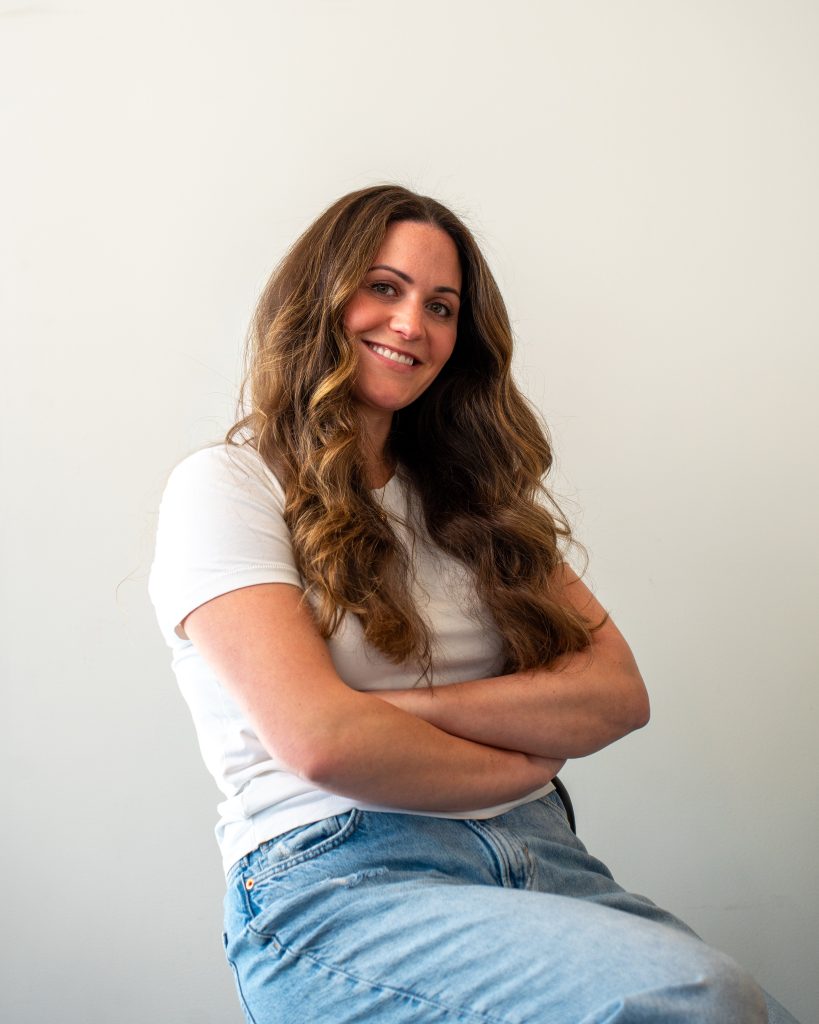
Rebecca Lysenko
Owner, The Refillery Storehouse
In a retail world built on convenience, speed, and excess, Rebecca Lysenko is quietly making the case for a different kind of shopping experience in New York’s Hudson Valley, one rooted in intention, community, and the simple idea that people should be able to buy only what they need.
Her business, The Refillery Storehouse, a thoughtfully curated refillery in Eastdale Village, is more than a store. It is part pantry, part education hub, part lifestyle shift. Customers arrive with mason jars, repurposed oat containers, spice bottles, and canvas totes. They leave with exactly the amount they need—nothing more, nothing wasted. In an era when sustainability can often feel abstract, expensive, or performative, her model offers something refreshingly tangible: a daily practice people can actually adopt.
The concept did not emerge from a boardroom trend forecast. It grew out of a childhood steeped in natural food retail. Her father owned local natural food stores for more than four decades, and she grew up watching customers navigate bulk bins and bring in their own containers long before zero-waste living became a cultural buzzword. That early exposure planted a seed. Even before she fully understood the environmental implications, she was fascinated by the practicality of bulk shopping, the freedom it gave people to choose quantity over packaging, usefulness over excess.
After studying marketing and spending time figuring out what path she wanted to pursue, she found herself returning to that original world. Working in her father’s smaller store after college, she noticed not only the rhythms of retail, but the possibilities within it. She knew she wanted to build something of her own. She just did not yet know what form it would take.
Then came the idea: what if the bulk section was not just one corner of a store, but the entire concept?
It was a deceptively simple question. The answer became the foundation of a business built around refilling, reusing, and rethinking everyday habits.
Like many entrepreneurial stories, hers sharpened during a moment of disruption. During the pandemic, her full-time job in the fragrance industry was reduced to part-time. Faced with uncertainty, she began focusing seriously on the business plan she had only previously imagined. Encouraged by her now-husband, she used that period to channel her energy into building something that felt both practical and meaningful.
At the same time, Eastdale Village in Poughkeepsie was taking shape not far from her home. She recognized immediately that location would matter. If she were going to open a business, she wanted it to be there. What followed was not a quick launch, but a patient three-year process of conversations, planning, and buildout. Because the storefront was new, she was able to customize the space and shape it around the customer experience she envisioned.
Today, the store has been open for nearly three years, and its growth reflects not just demand, but a cultural shift.
What makes the refillery compelling is that it solves problems people already feel in their everyday lives. Most shoppers know the frustration of buying a whole bag of specialty flour for one holiday recipe, or a full jar of spice they will use once before it expires in the back of the pantry. Most have looked at shelves cluttered with half-used products and wondered whether there is a better way.
Her store is built around that question.
With more than 300 bulk products, customers can purchase as little or as much as they need. A first-time visitor without containers can use complimentary paper bags. Regulars bring jars from home. For some, the appeal is environmental: less packaging waste, less food waste, more mindful consumption. For others, it is financial. Because everything is sold by weight, many staples come at prices competitive with traditional supermarkets. Oats, for example, are among the store’s best sellers and often cost less than packaged versions elsewhere.
But the refillery offers something else as well: a shift in pace.
This is not a grab-and-go supermarket experience. It requires curiosity, a little time, and often a bit of guidance. Customers stroll. They ask questions. They learn how the system works. For some, especially those raised on conventional grocery shopping, the experience can feel unfamiliar at first, even intimidating. That learning curve is real, and she acknowledges it openly. Education has been one of the most important parts of building the business.
Every day, she and her staff help customers understand not just how to shop in the store, but why the model matters. Once people get comfortable, many return again and again. Some even send photos of their neatly organized pantries, filled with labeled jars and thoughtfully chosen staples. What begins as a shopping errand often becomes a small ritual: practical, beautiful, and surprisingly calming.
That response points to a deeper truth: sustainability is not only about sacrifice. Sometimes it is about rediscovering pleasure in thoughtful living.
The store also reflects the demographics of its surrounding community. Eastdale includes young families, retirees, and downsizers, people at very different life stages but often united by the same need for flexibility. For a person living alone, the ability to buy a cup of flour instead of a five-pound bag makes sense. For a family trying to reduce waste or manage food costs, the model is equally appealing. It is sustainability made accessible through usefulness.
Still, accessibility does not mean compromise. As the business has grown, she has become increasingly intentional about sourcing. In the early days, she worked with a primary distributor to get the store open. Now, with a more established customer base and a clearer sense of demand, she is shifting more decisively toward organic and all-natural products. The store’s mission is not only to reduce packaging waste, but to offer goods that align with broader values around health, ethics, and responsible sourcing.
That requires constant attention. Trends change. Customer needs evolve. Some products move quickly; others do not. When an item is a slow seller, the store bags it up to ensure it does not go to waste, then rotates in something new. That flexibility is part of her leadership style. She describes herself as both mission-driven and committed to her values, but willing to pivot when needed. In a category where consumer behavior is still evolving, that combination may be one of her greatest strengths.
She is also honest about the emotional complexity of sustainable living. For all the urgency surrounding climate conversations, her philosophy is strikingly grounded. People do not need to go from zero to one hundred overnight, she says. They need to take baby steps. They need to do what fits into their daily routine, build habits gradually, and understand that even small changes matter.
That mindset runs through both her business and her personal life. A self-described introvert and new mother, she speaks with unusual candor about time, routine, and the need to stay centered. If she could have any superpower, she says, it would be the ability to slow time down, not to do more, but to be more present. It is an answer that feels especially telling in the context of her work. Her store, in many ways, invites people to do exactly that: slow down, pay attention, and engage more consciously with the ordinary choices that shape their lives.
The long-term goal is expansion. She imagines eventually opening multiple locations, perhaps even growing far beyond the Hudson Valley. Customers from out of town already tell her they wish they had a store like hers in their own cities. For now, though, her focus is on refining the current model, learning from the community she serves, and making sure the foundation is strong.