
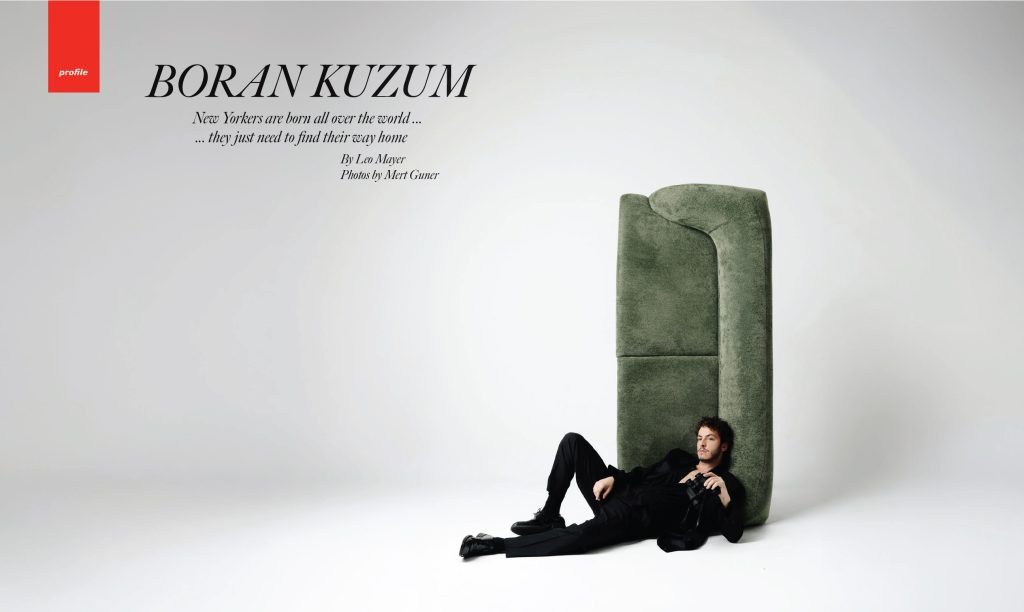
By Leo Mayer
Photos by Mert Güner
There is something uniquely transformative about New York City. It is a place where identities blur, cultures collide, and strangers become locals almost by instinct. For one Boran Kuzum arriving from Istanbul, New York was not simply a destination, it was an awakening. As he describes it, when you surrender yourself to the city, “New York somehow takes you in… and makes you feel like you belong.”
This sense of belonging, however, did not begin in Manhattan. It was rooted in a much earlier discovery, one that would shape not only his career, but his understanding of empathy, storytelling, and human connection.
Growing up in Ankara, the capital of Turkey, he was surrounded by the arts from an early age. His father, connected to state theaters, exposing him to a world where performance was not just entertainment, but expression. Yet, like many young people navigating education systems that prioritize structure over self-discovery, he initially struggled to find his path. He experimented with different academic directions, even studying economics briefly before realizing that creativity, not calculation, was where he belonged.
The turning point came at the age of sixteen. Reading John Osborne’s Look Back in Anger, he encountered a character whose rage initially felt alien and frustrating. But as the story unfolded, the character’s anger revealed itself as a shield—a response to pain, trauma, and vulnerability. In that moment, something shifted. The young reader began to understand not just the character, but the people around him—even his own relationships—through a new lens of empathy. This was the power of acting: the ability to reveal hidden truths and to create understanding where there was once judgment.
From that point forward, acting was no longer just an interest; it was a calling. After studying theater at Istanbul University State Conservatory and building a decade-long career in Turkey, he came to recognize a fundamental truth about art: it exists in relationship with an audience. “Your job is nothing without an audience,” he reflects. And for an artist seeking to expand perspective and connection, reaching a broader audience became essential.
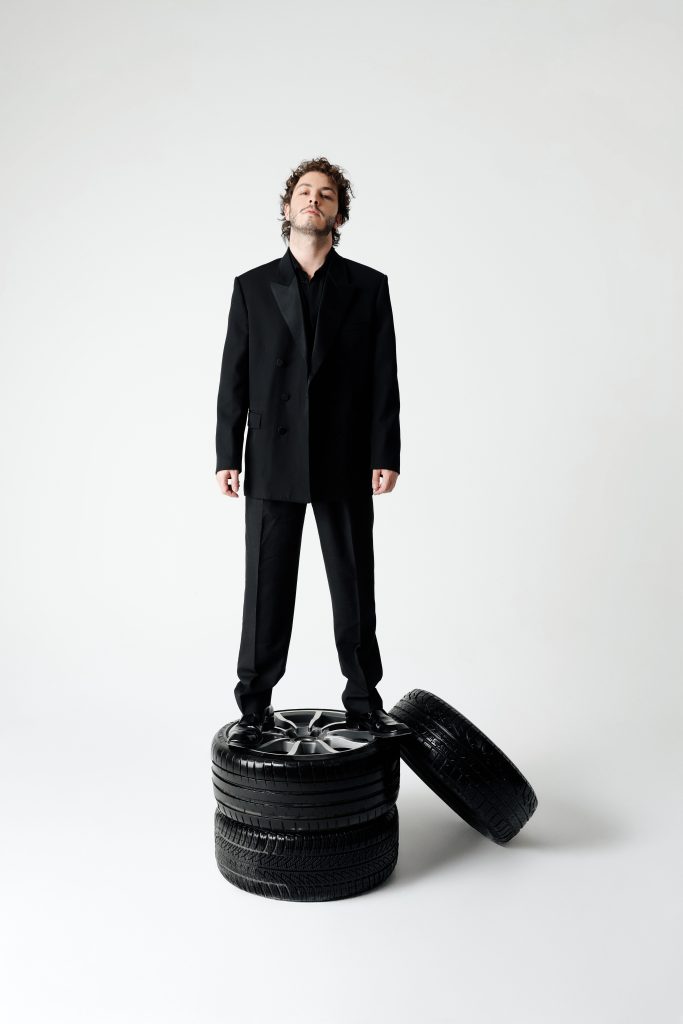
That desire ultimately drew him toward the United States—toward New York, a city that embodies global storytelling. The journey, however, was not immediate. Securing an O-1 visa, a process intended for individuals with extraordinary ability that took nearly two years. It was a test of patience, resilience, and belief. But when the breakthrough finally came, it came quickly. Within a short time of arriving in the United States, he landed a role in a major project.
Kuzum stars in Dan Levy’s new Netflix series Big Mistakes. The series follows two siblings blackmailed into the world of organized crime and features a cast that includes Laurie Metcalf, Taylor Ortega, and Levy himself. Kuzum plays Yusuf, a store owner robbed by one of the siblings, Morgan, played by Ortega. After recognizing Morgan, hilarity and chaos ensues. The project marks Kuzum’s highly anticipated introduction to American audiences.
Walking onto set for the first time, he felt like a beginner again, “a kid in a candy store,” absorbing every moment. This humility and presence reveal a deeper truth about artistic growth: achievement does not end the journey; it expands it.
Central to his craft is a belief in the responsibility of storytelling. Acting, he explains, is not merely about performance, it’s about perspective. Through characters, actors have the power to challenge assumptions, reveal complexity, and foster empathy. In a world increasingly divided by misunderstanding, this function becomes more important than ever. “The thing we need the most is empathy,” he says, emphasizing that art allows us to understand differences rather than fear them.
This philosophy extends beyond acting into his views on modern culture. In an era defined by rapid technological change, particularly the rise of artificial intelligence, he advocates for balance. While acknowledging the benefits of innovation, he warns against overreliance. Creativity, he believes, is fundamentally human—and when we outsource too much of it, we risk losing the very essence of what makes us alive.
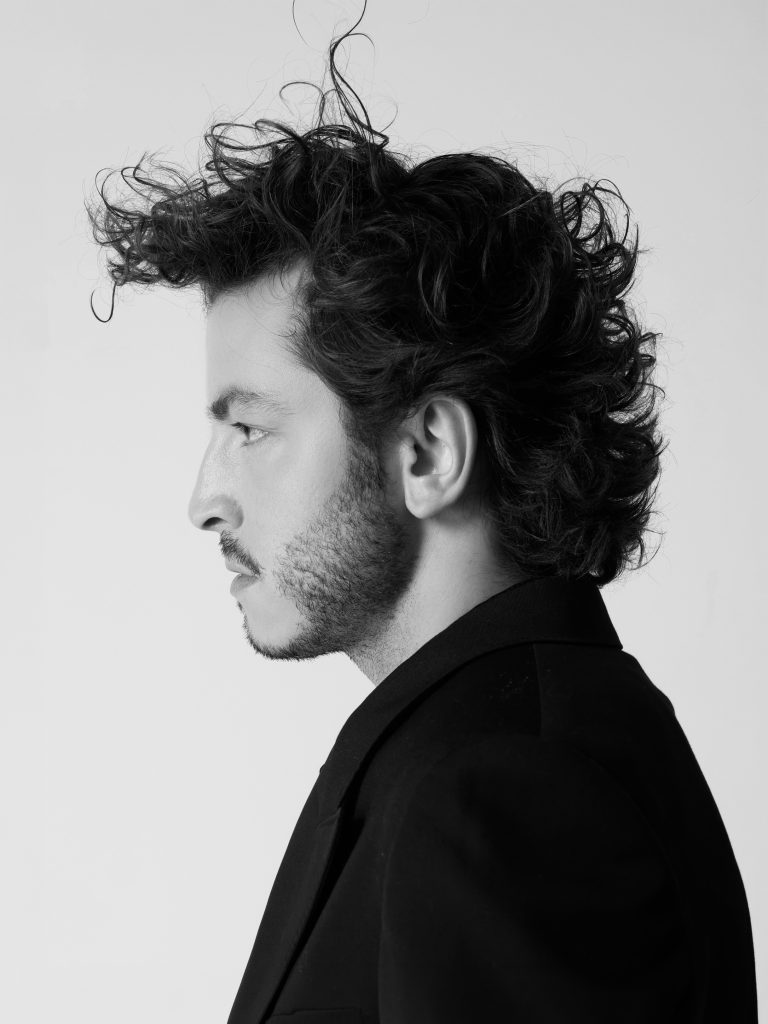
Similarly, his relationship with social media reflects a nuanced understanding of identity in the digital age. Having grown up alongside these platforms, he experienced firsthand the pressure of being defined by others before fully understanding himself. Over time, however, he reframed his approach. Social media became not a space of judgment, but a tool for self-expression—something to be used with intention and balance rather than dependence.
Even in areas like fashion, which often intersect with his acting career, he approaches the work as an extension of storytelling rather than a separate pursuit. Costume, for him, is not superficial—it is foundational. Understanding what a character wears helps him access who that character is. In this way, fashion becomes another language through which stories are told.
Ultimately, his journey—from Ankara to New York, from uncertainty to clarity—is not just about career progression. It is about discovering a deeper connection to the world and to others. New York is more than a backdrop. It is a symbol of possibility, a place where diverse voices converge and where, as he experienced, it becomes “easy to feel like a local.”
And perhaps that is the most powerful takeaway from his story: that belonging is not defined by where you come from, but by how you connect with people, with stories, and with the world around you.