
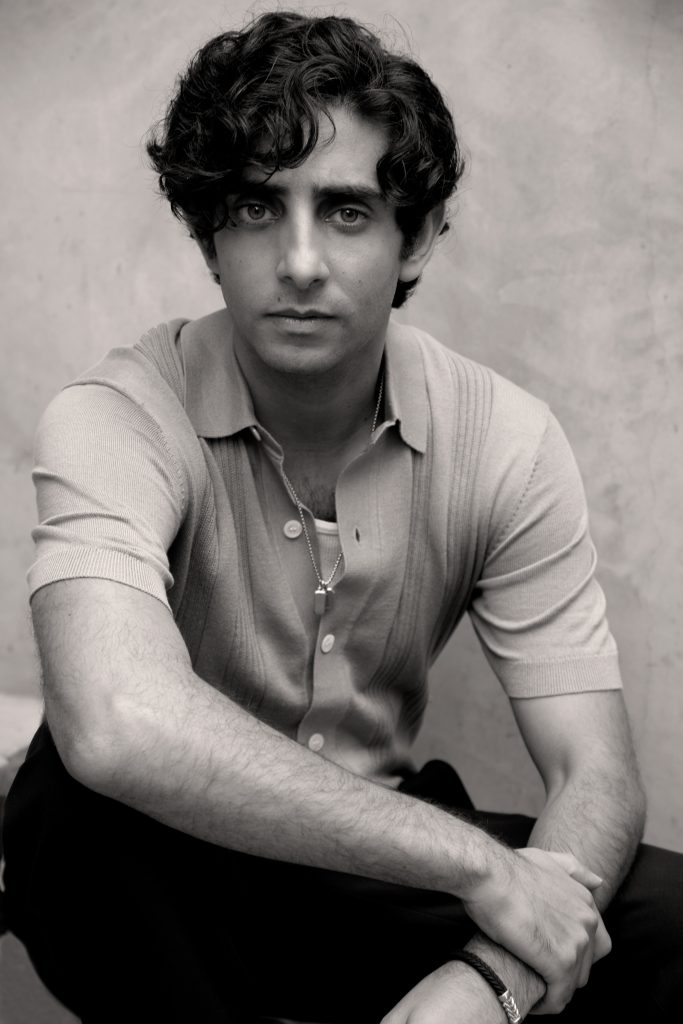
By Moonah Ellison
Photos by Dean Foreman
Luke Dimyan is laughing. This happens a lot. He laughs at himself, at the absurdity of the business he has chosen, at the peculiarities of his family and, occasionally, at the fact that for the past five years he has been professionally associated with perhaps the most famous betrayal in human history. There is an appealing looseness to him in conversation: thoughts arrive quickly, collide with other thoughts, disappear down unexpected side roads and occasionally require Dimyan to stop mid-sentence in search of precisely the word he wants. He is thoughtful without performing thoughtfulness, earnest without becoming solemn, and possessed of the slightly dangerous comic energy of somebody who would rather risk looking foolish than spend his life looking composed.
Which is useful, because Luke Dimyan has just finished playing Judas Iscariot.
As career baggage goes, that is fairly substantial. For five years, Dimyan inhabited one of history’s most notorious men on The Chosen, the enormously successful biblical drama that transformed ancient scripture into something intimate, contemporary and human. Filming is over for Dimyan now. He finished roughly a year ago, leaving him with an unfamiliar sensation he describes, with characteristic contradiction, as “freedom” mixed with anticipation. The machinery of The Chosen continues around him, but Dimyan has stepped outside it and found himself facing the question every actor eventually confronts after the role people know them for: Who are you when you are no longer him?
His answer, for the moment, is: still figuring it out. “I’m in a beautifully freeing, anxious journey of discovery,” he says, which is actor-speak for something considerably more straightforward: the job ended, and now he has to figure out what the hell comes next. Dimyan is funny about this rather than tortured. Success hasn’t removed the uncertainty; it has simply given him a better vantage point from which to contemplate it. Spend any time talking to him and Judas quickly becomes only one part of the story. Dimyan would just as happily discuss comedy, loneliness, AI, faith, family, kindness, Robin Williams or why everybody needs to stop being quite so terrified of looking ridiculous.
“Happiness is a choice that I have to remind myself to choose every morning.”
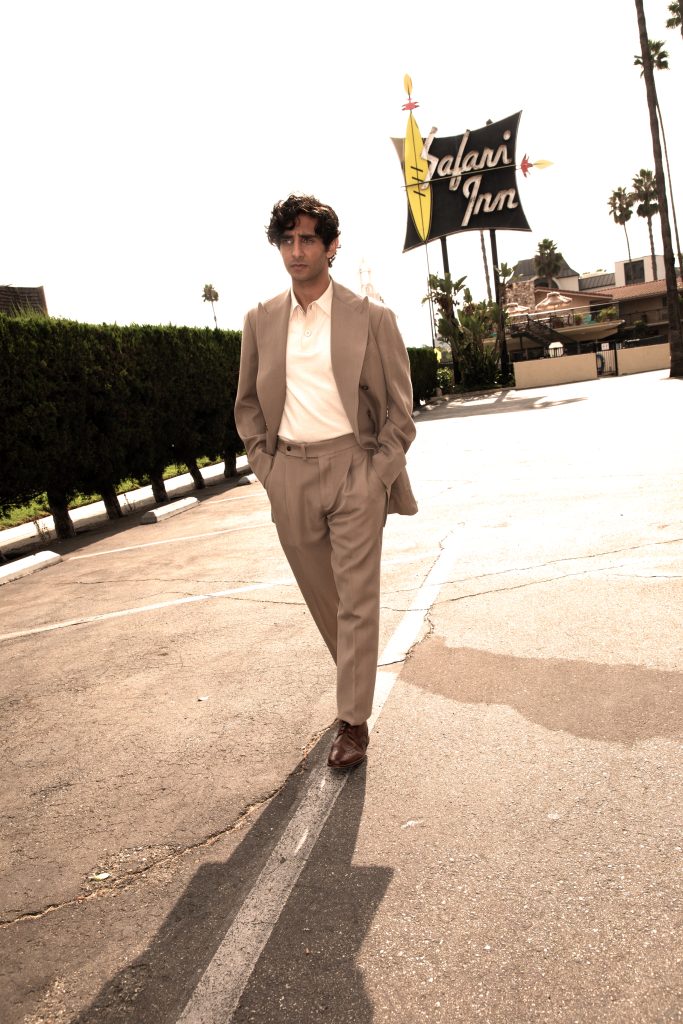
The comedy thing started early. Dimyan grew up Coptic Orthodox, surrounded by biblical stories and a close Egyptian family, but his other religion was cartoons. Looney Tunes. Tom and Jerry. Anything loud, physical and slightly unhinged. He was apparently the sort of noisy, interactive child who could suddenly become “as still as a stone” when the television came on. Then he saw Jim Carrey in The Mask and discovered that an actual human being could behave like a cartoon. This was important. “I want to become a real-life cartoon,” he remembers thinking. Soon came Gene Wilder, Robin Williams, Eddie Murphy and Dana Carvey—performers who could take chaos and somehow make it precise. Dimyan talks about them less like celebrity heroes than evidence: proof that enormous personalities did not necessarily have to be made smaller to become interesting.
“We’re desperately in search of authenticity now more than ever.”
What worries Dimyan isn’t technology so much as what constant visibility may be doing to us. Everybody has a camera. Everybody can be judged, clipped and reposted. Everybody is watching everybody else. “Because of social and because of the constant stream that we’re on, everybody’s noticed,” he says. Somewhere along the way, spontaneity became risky. Dimyan’s resistance to that is wonderfully uncomplicated: sometimes you should simply do something because it is fun. Be silly. Get it wrong. Step outside. Change the channel, literally or metaphorically. “Humans will always get sick of the now,” he says, “and they’ll look for something better.”
“If you give someone a chance to be softer, to be kinder, you’d be surprised how many people will take you up on that offer.”
For all the jokes, Dimyan keeps returning to people. Growing up, he often felt like an outsider, never entirely sure where he fitted culturally or socially. Words could be difficult, so he retreated into himself and developed the young man’s fantasy that if he simply became exceptionally good at something, everyone would eventually understand him. Acting became the thing. A demanding high-school teacher introduced him to Shakespeare and, more importantly, refused to coddle him. Dimyan worked. He trained. He auditioned. He failed. His first shot at The Chosen was an audition for Simon Peter, a married man with a brother and sick mother. Dimyan turned up looking, by his own admission, like he was straight out of high school. He and director Dallas Jenkins essentially reached the same conclusion: probably not.
Then Covid hit. The industry stopped. Dimyan took a cashier job at a mom-and-pop drugstore and kept auditioning. In 2020, The Chosen came around again. This time he read for Philip, got called back and was eventually slipped material for Judas. He auditioned. Nothing. A month passed. Dimyan assumed perhaps they might throw him a shepherd. Instead, he got Judas and spent the next five years humanizing the man whose name has been shorthand for betrayal for roughly two millennia. It is the sort of role that could easily swallow a young actor whole. Dimyan seems determined not to let it.
“If you don’t fight to change life, but fight to live it, you’ll find so much more to appreciate.”
So now he is making things. Not waiting for things, making them. He has written a comedy pilot with friends, staged a reading and is developing a short-form version. He wrote a short film for his longtime friend Luke Tennie, found a producer, effectively informed Tennie that he was going to be in it whether he liked it or not, shot the thing over three days and is now navigating the festival circuit. There is something pleasingly DIY about it all. Dimyan has spent five years inside a giant production and emerged wanting to get his hands dirty.
“Recognition in itself is sometimes a fallacy.”
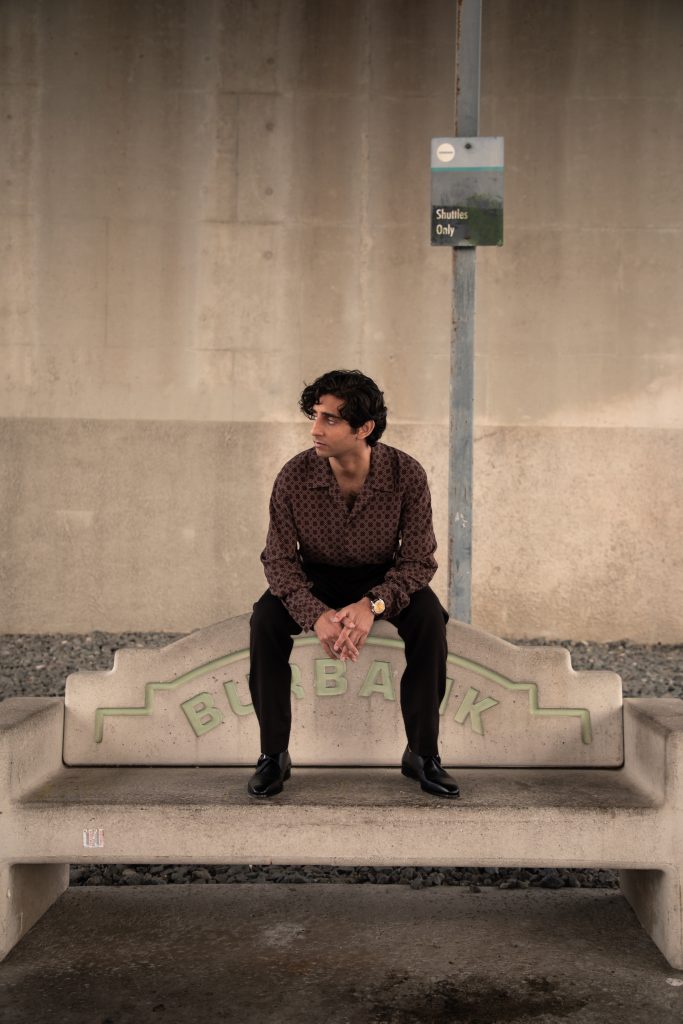
That line may say more about where Dimyan is now than anything else. He understands the strange arithmetic of fame: work for years, have one project connect, and suddenly everyone behaves as though you arrived fully formed last Tuesday. Dimyan doesn’t seem particularly seduced by it. He talks admiringly about actors who worked long before the world suddenly decided to notice them, and keeps a Robin Williams quote nearby about being given a single “spark of madness” and not losing it.
That spark feels more relevant to his future than Judas. The role gave him recognition; what he wants now is range. Comedy. Writing. Producing. Bigger acting swings. The freedom to be broad when broad is funny and serious when serious matters. Most of all, he appears determined not to sand away the eccentricities that got him here in the first place.
People haven’t forgotten how to laugh, Dimyan says. They’ve simply “taken a bit of a sabbatical.”
It sounds like he intends to bring them back.