
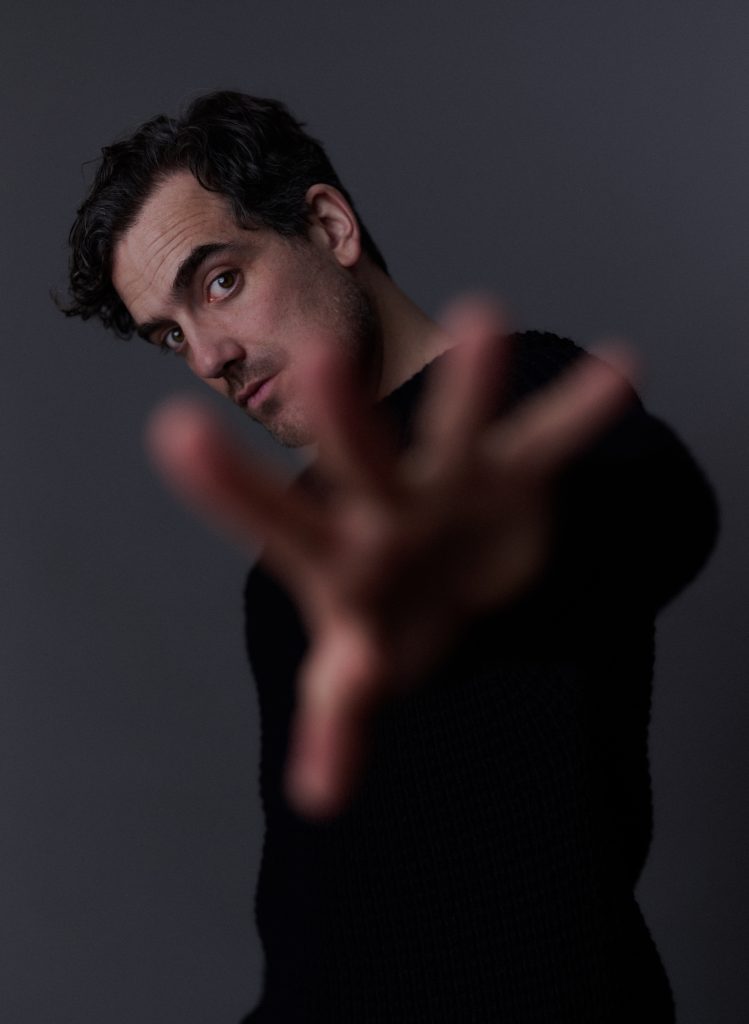
In an era when actors can arrive at an interview apparently armed with a committee-approved anecdote, three talking points and a charming story about sourdough, Daniel Ings gives the impression that he might actually tell you what he thinks. He laughs easily, wanders happily down conversational side streets and, when technology misbehaves at the beginning of our conversation, simply waits for humanity to defeat the machine. It feels appropriate!
Daniel Ings is having a particularly interesting moment because his career appears to be moving in the opposite direction of the algorithm: not toward repetition, but away from it. The actor — who became a familiar face as Luke Curran in Lovesick; Mike Parker in The Crown; Cob Betterton in I Hate Suzie; Archie Osborne in The Gold, and the gloriously troublesome Freddy Horniman in Guy Ritchie’s The Gentlemen — has spent the last few years demonstrating that being recognizable need not mean becoming predictable. His recent credits have moved from the rarefied, murderous luxury of The Woman in Cabin 10, in which he played wealthy heir Adam Sutherland, to Westeros, where he became Ser Lyonel “The Laughing Storm” Baratheon in A Knight of the Seven Kingdoms. And the road ahead is hardly quieter: Kill Jackie, opposite Catherine Zeta-Jones; Prima Facie with Cynthia Erivo; The Rachel Incident, and, further out, Star Wars: Starfighter are among the projects extending an increasingly eclectic résumé.
“There’s always a big old comedy ham in me, just waiting to burst out at the next opportunity.”
Comedy, unsurprisingly, is never very far away. “I’ve always worked in comedy,” Ings says, conceding that even when he wanders into darker territory, that “big old comedy ham” remains inside, waiting for release. But genre, he has realized, matters less to him than character. What excites him now is the possibility that the next role might require something the previous one did not. He talks about the danger of becoming “a bag of tricks,” of discovering what works and simply producing it again. Ings would rather make himself uncomfortable.
It explains the odd pleasure of his current trajectory. A Knight of the Seven Kingdoms placed him inside one of television’s most famous fictional universes, although, wonderfully, he had not actually watched Game of Thrones when he accepted the role. He had auditioned for the original series over the years but deliberately avoided bingeing it before filming the spin-off, wanting to approach this tonally distinct story on its own terms. Afterwards, duty and curiosity won. He and his family tore through all eight seasons in roughly a month. “I fell in love with it,” he admits. His own series, set roughly a century before Game of Thrones, offered him something particularly suited to his instincts: grandeur without surrendering humor, brutality accompanied by lightness, and in Lyonel Baratheon a character he could plainly enjoy.
“I look less at genre and more at the character—and what playing this character might mean for me.”
That appetite for contrast has become something of a career principle. Ings points to Prima Facie and Kill Jackie: projects that may both place him somewhere near the legal profession, but otherwise occupy radically different worlds. In Prima Facie, the screen adaptation of Suzie Miller’s acclaimed play starring Cynthia Erivo, Ings plays Julian Brooks; in Kill Jackie, he is Sam, the buttoned-up lawyer, and long-held crush, of Catherine Zeta-Jones’s Jackie Price, a former international cocaine dealer whose carefully constructed luxury life becomes considerably less relaxing when a team of assassins is hired to kill her. “They could not be more distinct projects, tonally,” he says, and there is a detectable pride in having been allowed into both sandboxes.
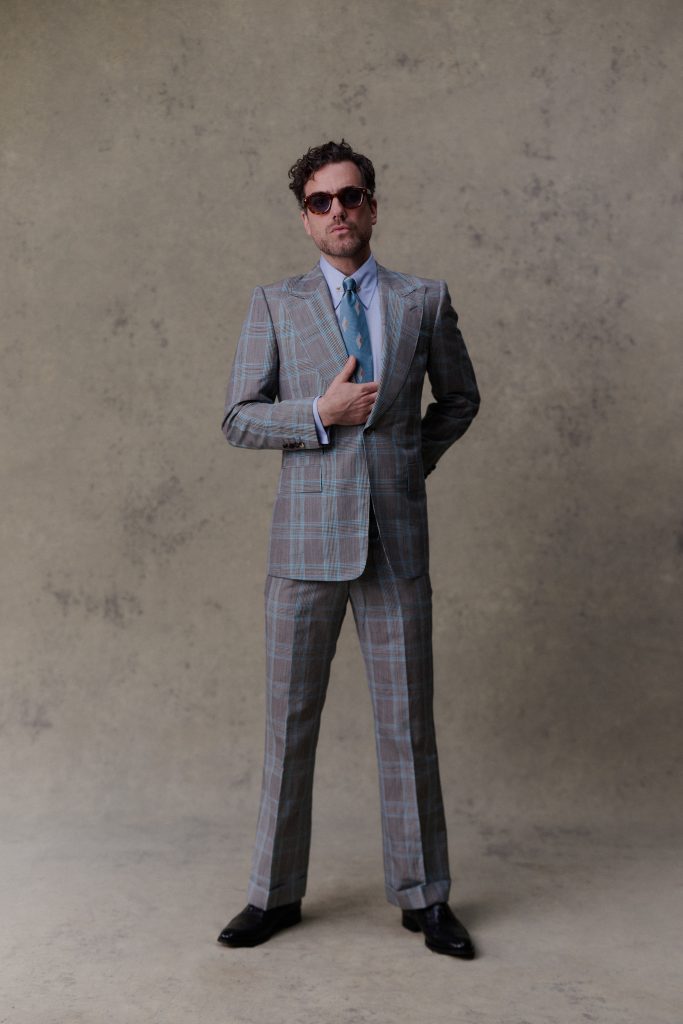
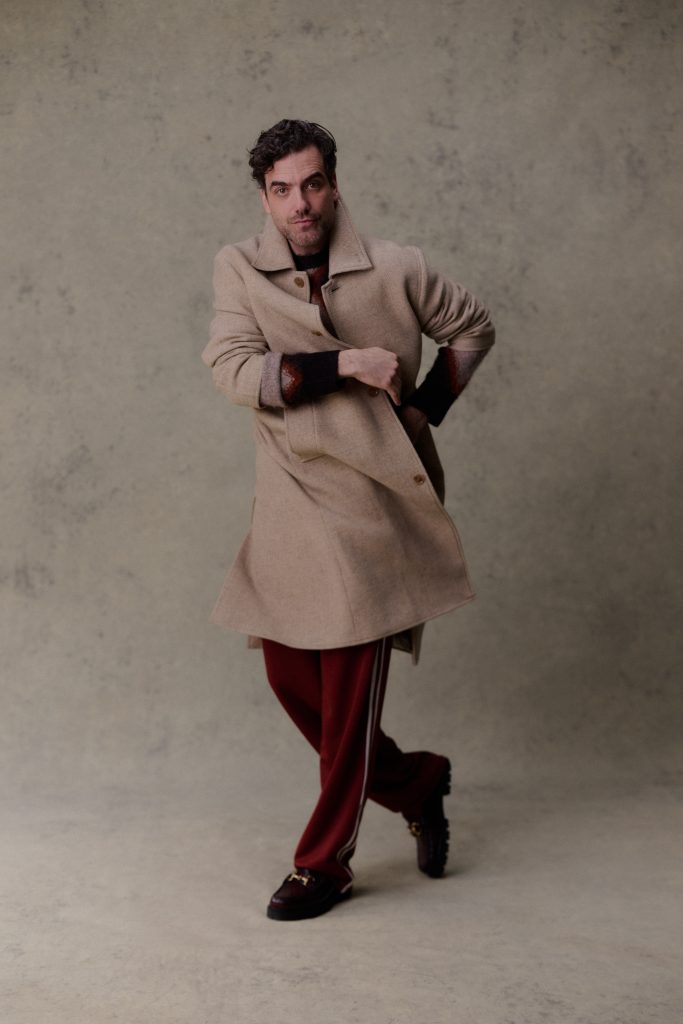
That phrase tells you something about Ings. He talks seriously about craft without embalming it in seriousness. Acting, for him, still sounds suspiciously like play. He is fascinated by actors who must acquire an entirely new skill for a role—Timothée Chalamet learning the physical and musical vocabulary required for Bob Dylan, for example—and likes the terrifying attraction of confronting a part and thinking: I haven’t done this before. I’m not entirely sure I can do it. “I’m excited by those new challenges,” he says. “I don’t quite know if I can, but I’m gonna have to figure out this accent or this aspect of the character or this genre.”
Perhaps inevitably, that curiosity is beginning to pull Ings behind the camera. He is writing and developing projects with producer Ilda Diffley, whom he met while making Netflix’s The Woman in Cabin 10. Together they are building a slate that includes a project with Sister Pictures written by Tom Edge, Ings’s former Lovesick collaborator, another with Two Brothers, and a project Ings himself has written that they have taken to filmmaker Robert Machoian, whose The Killing of Two Lovers he considers one of his favorite films. It is a revealing evolution.
For years Ings has inhabited other people’s worlds; now he is becoming increasingly interested in deciding which worlds should exist in the first place. He describes himself as being at “the foothills” of producing, still learning how the machinery works, and there is no grand declaration about becoming a mogul. What interests him is taste: putting something into the world that reveals what he finds funny, moving, strange or worthwhile. He even has a dream subject. A former drummer who grew up obsessed with The Who, Led Zeppelin and Bob Dylan, Ings has long wanted to play Keith Moon. There is another figure who fascinates him too: Mickey Dora, the brilliant, rebellious and deeply complicated surfer whose life eventually included going on the run from the FBI. “I would quite like to make the Mickey Dora movie,” Ings says. One suspects that sentence may yet become prophetic.
All of which makes Ings an interesting person to ask about the technology currently promising to reinvent the business. His attitude toward AI is neither evangelical nor particularly soothed. His larger fears, he says, are “fairly existential,” but when it comes specifically to acting, his concern is not that audiences will suddenly abandon human stars for synthetic leading men and women. He doubts they will. The more immediate danger, in his view, is further down the economic ladder: background performers and supporting artists whose jobs provide the income that allows them to remain actors long enough to audition for larger roles. Remove that work, he argues, and you risk shrinking the talent pool to those who can already afford to remain in it. It is a less glamorous argument than wondering whether an AI movie star will walk the Oscars red carpet, but a more human one. Ings remains optimistic about the audience’s appetite for the handmade. He compares it to vinyl: technology supposedly renders something obsolete and then human beings decide that, actually, they rather liked the ritual. He sees a similar hunger in independent cinema and in audiences responding to filmmakers whose taste and craftsmanship they trust.
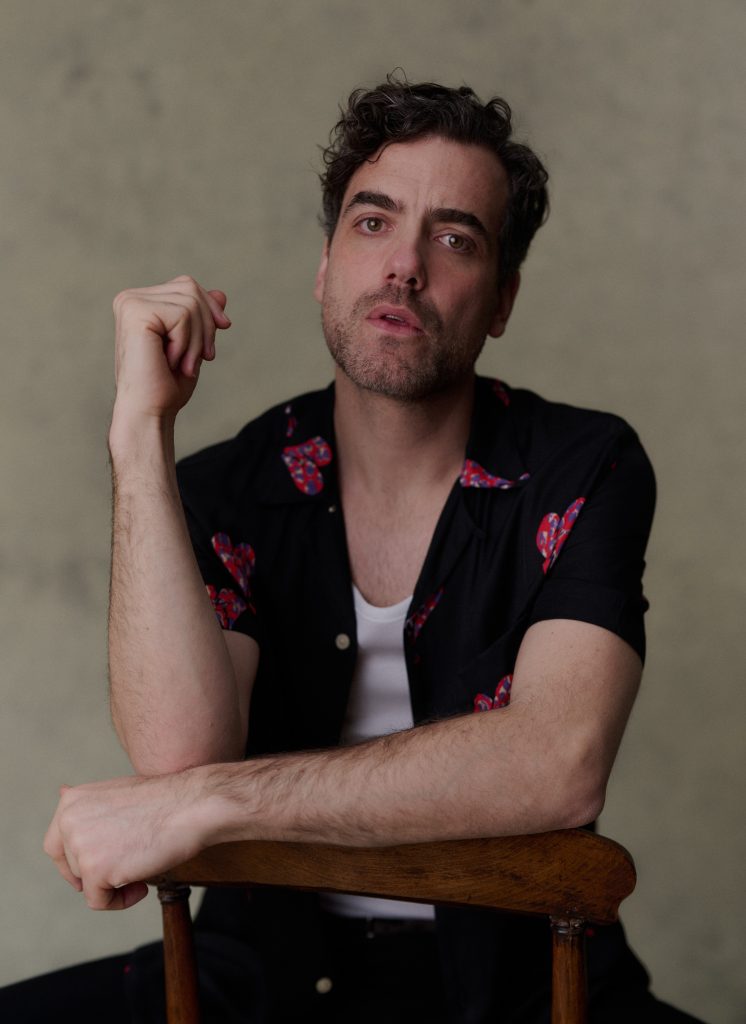
That may also explain why Ings’s own career feels particularly well positioned at this moment. He has done prestige television and broad comedy, period drama and fantasy, Netflix hits and Hollywood franchises. He spent two seasons on CBS’s Instinct opposite Alan Cumming after legendary casting director Meg Liberman championed him into a talent deal, an experience that also gave Ings, his wife and their then very young children a few years in New York—and autumn escapes to Woodstock and the Catskills that he remembers with enormous affection.
Now the scale expands again. Beyond his current 2026 work, Star Wars: Starfighter is listed among his 2027 projects, while The Rachel Incident and other productions continue the curious genre-hopping pattern he seems determined not to break.
Yet for all the franchises, premieres and increasingly ambitious producing plans, Ings seems intent on protecting the ordinary bits. His children, he says, are creative, musical and theatrical, but he has no appetite for pushing them into the industry early. “I want for their childhoods to remain childhoods.” It is perhaps the most revealing line of the conversation. Daniel Ings may be interested in where technology takes us, where filmmaking goes next and what unexplored corner of himself the next role might expose, but he remains rather firmly attached to the human stuff. Curiosity. Family. Craft. Risk. Laughter. The possibility of making something because you believe it ought to exist. His wife, he says, has a favorite expression: one day, the people asking what the hell you are doing will ask how the hell you did it. Ings laughs when he repeats it. Then he adds the part that may be the real manifesto: “All of the best stuff comes from someone who everybody thought at the time was mad and out of their mind.” For an actor entering perhaps the most expansive chapter of his career, it sounds less like advice than a plan.
Photographer: Pip
Stylist: Gareth Scourfield
Groomer: Jody Taylor