

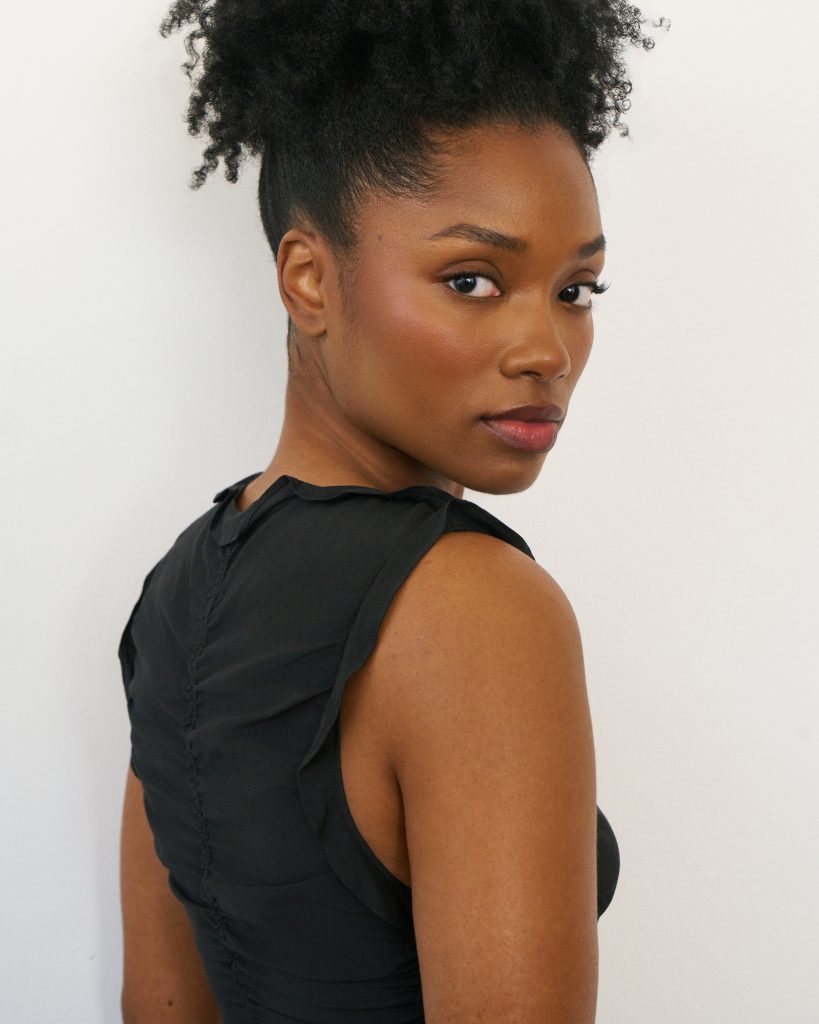
In a television landscape increasingly addicted to moral certainty, Nona Parker Johnson finds herself inhabiting its delicious opposite. In Dexter: Resurrection as Fiona Mixon, a young homicide officer negotiating the treacherous territory between justice, ambition, and inherited expectations, Johnson brings intelligence and psychological curiosity to a franchise built on humanity’s darker appetites. With credits including The Handmaid’s Tale, Sugar, and Mayor of Kingstown, she is an actor whose growing versatility suggests a career as unpredictable as the characters she inhabits.
A Q&A with Sally Boll
Photos by Emily Soto
The original Dexter challenged conventional ideas about morality. Why does its appeal endure?
The show brings us into the catharsis of satisfying “the urge” in a way that remains irresistible. We know who the monsters are, and we know Dexter is the monster slayer. We never tire of watching him win, even when he scares us. It’s a tale as old as time.
What intrigued you about Fiona Mixon, your character in Season 2?
I love how no-nonsense she is. She sets clear boundaries, knows what she wants, and lives in the moment. She’s determined and exacting, yet still young, with considerable responsibility and pride in her upbringing. Experience is her primary teacher.
How did you approach portraying a homicide training officer?
I wanted Fiona to weather the demands while remaining grounded. She’s familiar with pressure and eager to meet challenges. Characters like Fiona are fascinating because their tough exteriors are rarely airtight.
How did you prepare for the role?
Two advisers on set coached me through the physicality and technical aspects of police work. Learning where to hold tension helped heighten the stakes of action-oriented scenes.
What did you discover about Fiona beneath her toughness?
Some of that toughness is a cover, preventing anyone from getting too clear a read on her. The moments when she lets her guard down were among the sweetest discoveries.
Is Fiona guided by instinct, logic, ambition, or emotion?
She believes in doing things by the book because she sees procedure as a route to genuine justice. Yet she’s frustrated by its limitations and capable of acting rashly. She wants to follow reason but is ultimately heart-led.
How does her relationship with her father influence her work?
Following in his footsteps brings pride but also pressure to prove herself. She works directly under him, initially to her delight, but struggles with the unexpected. Her impatience sometimes threatens her naturally efficient approach.
What did working alongside Michael C. Hall teach you?
There was something spirited about how he inhabited Dexter, particularly in quieter, more morose moments. He reminded me how important a dynamic internal life is. That focus can be felt regardless of the scene.
What was it like joining such an accomplished cast?
Inspiring. Almost immediately, I felt the weight of becoming part of an incredible legacy.
What distinguishes Dexter: Resurrection from other psychological thrillers?
The writing. Its wry humor and the Morgan family dynamics cleverly reveal generational differences, making it funny and unexpectedly touching. Add extraordinary actors playing twisted characters, and it becomes an all-you-can-eat buffet for genre lovers.
Your credits include Sugar, Mayor of Kingstown, Fear the Walking Dead, and Law & Order: Organized Crime. What has been most rewarding?
Embodying different young women in extraordinary circumstances. I’ve also learned enormously from veteran actors, directors, and crew members. Their stewardship and encouragement have permanently changed my work. I love science fiction and fantasy and hope to explore more.
Did previous roles help prepare you for Fiona?
Playing Nova in Organized Crime helped me understand Fiona’s pride in following her father. I imagined treasured memories of his achievements, almost like those of his biggest fan. Using memory beneath the surface is something I’ll keep exploring.
What did working on The Handmaid’s Tale mean to you?
It was enriching both professionally and personally. I find it impossible to separate work from the wider world. Thoughtful conversations with colleagues about both the material and contemporary society were especially meaningful. In this case, they were inseparable.
How did your childhood shape your acting?
My mother gave me my first acting note: “Don’t act, just be.” I heard it again while pursuing my MFA at USC. Growing up, education happened equally at school and home. Appreciating different viewpoints gives me more experiences and knowledge to draw upon.
Did your family encourage your ambitions?
I announced at ten that I wanted to act. My mother warned me it would be a long, arduous pursuit. She was right. We were encouraged to develop talents for personal enrichment rather than necessarily as careers. Eventually, my family trusted that however things unfolded, I would be okay.
What advice would you give aspiring actresses?
Hone your craft. It sounds clichéd, but every one of us is singular. Acting is a lifelong pursuit, so begin wherever you can, with whatever pulls you toward it.
What are you proudest of, and what comes next?
My ability to pivot. Unpredictability comes with this profession, but it has taught me about myself and strengthened my foundations. I hope to keep evolving. Right now, I’m concentrating on getting into tremendous shape, mentally and physically, ready for those dream action and combat roles.
Photographer: Emily Soto
Hair: Cassandra Normil
Makeup: Shyanna Lundi