When you first read the script for Soulm8te, what was your immediate reaction to Sara? What did you understand about her that perhaps wasn’t explicitly written?
What struck me immediately was how wildly powerful Sara was. She’s this jarring mirror of someone’s inability to love, to sit comfortably in their own skin. There’s something wickedly absurd about a machine designed to fulfil your every desire, only to throw your deepest insecurities straight back at you. And the funniest part is, she has absolutely no idea she’s doing it. The cruelty is entirely human.
You’ve described Sara as an android, but you’ve also talked about the role as being about “a constructed version of femininity.” What does that mean to you?
Playing Sara made me question my own relationship with femininity. How much of it is instinct, and how much is choreography? Sara is this grotesque, almost clown-like exaggeration of a woman programmed to anticipate every need. Somewhere in that absurdity, I started recognising myself. I like to think I’ve resisted those expectations, but playing her exposed how much of that conditioning I’ve swallowed without even realising it.
What was the biggest challenge in playing a character who is technically artificial but who has to make an audience believe that she is experiencing something emotionally real?
The biggest challenge was resisting the very human impulse to give Sara an inner life. I almost had to hollow myself out, finding this strange, doll-like doughiness in my face. I was constantly shadowing David, taking my cues from his approval. If something pleased him, I’d repeat it. That became my only guide to Sara’s emotionality. And strangely, the less emotion I played, the more room there was for the audience to project their own.
Did you think of Sara as a machine trying to become human, or as a woman trying to understand what it means to be human?
I saw Sara as a machine constantly adapting to the contradictions of being human. How lonely, avoidant, indecisive and shame-filled we can be. She’s programmed to serve someone who can barely steer himself. And then sprinkle womanhood on top, just to really break the machine.
How much of Sara’s performance is deliberately constructed? Is she learning how to perform femininity by watching humans?
All of it is deliberately constructed, hah. I loved drawing on Old Hollywood archetypes and the women of ’90s erotic thrillers, these hyper-feminine creatures built from fantasy and desire. But Sara is also absorbing the internet’s deranged catalogue of womanhood. Trad wives, makeup tutorials, weight-loss hacks, influencers teaching you how to please your man. And that’s the absurdity of AI. We feed it all our desires, insecurities and contradictions, then expect something flawless to come out the other end.
How did you and Kate establish the physical vocabulary of Sara?
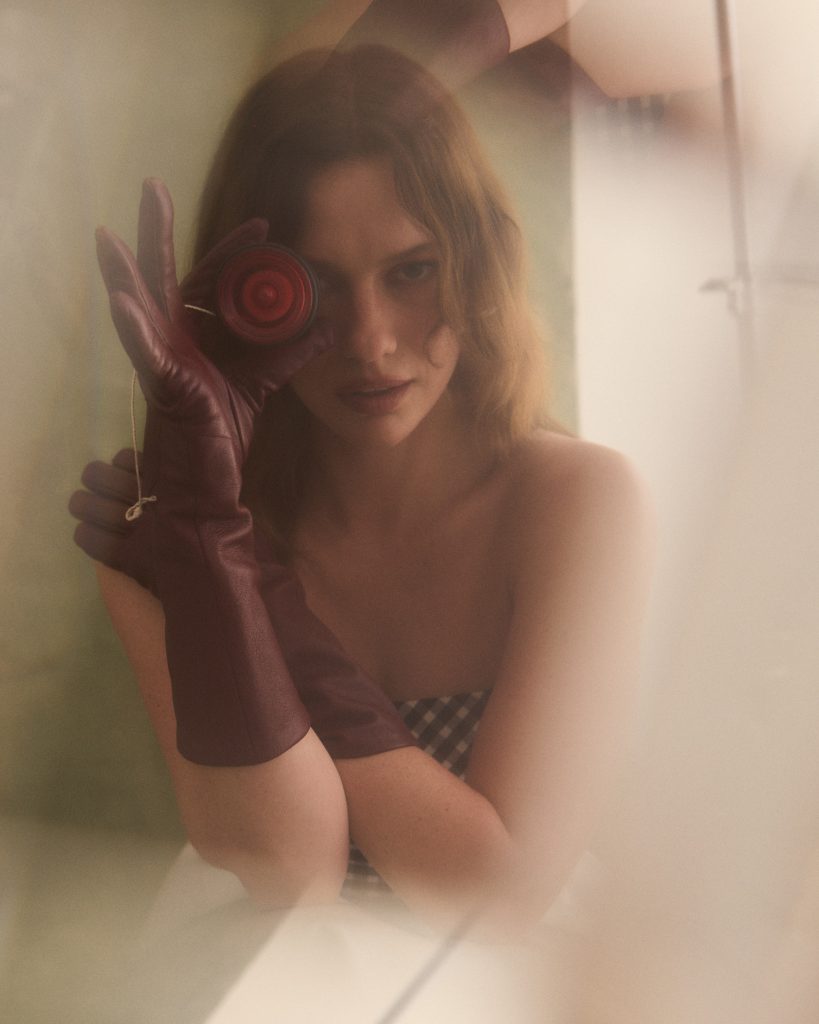
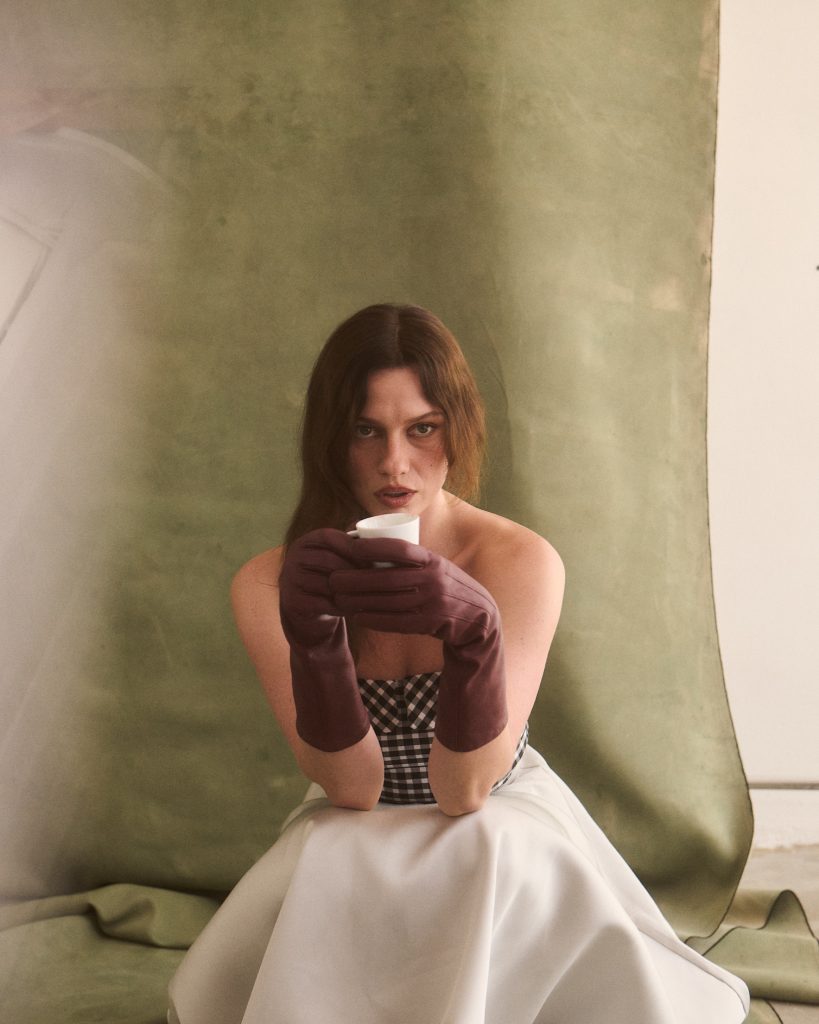
Kate and I were constantly playing with the dials of Sara’s physicality. How much real girl could we let in, and how much did we lean into the silicone-framed, artificial woman? I’d developed this doll-like physicality, full of awkwardness and little mechanical glitches, and throughout the shoot Kate would push me between those extremes. We wanted the audience to feel how hypnotised David had become by the illusion of intimacy, even with the machinery staring him right in the face.
You worked with movement coach Ruth Lehane and used Jacques Lecoq-inspired physical theatre and mask work to create Sara. What did that process unlock for you?
It unlocked a completely different way of approaching character. I’m fascinated by the Lecoq philosophy of allowing the body to lead rather than the mind. Ruth Lehane and I explored Sara through movement, rhythm and stillness, creating our own little world in prep. It was this magical experience of imagination, belly laughter and suspension of disbelief. Honestly, this job changed me as an actor. It taught me to quiet the mind and truly play without judgement.
Was Sara’s sexuality something you approached differently because she is AI?
Yes. I really wanted to mess with the “Born Sexy Yesterday” trope. A grown woman’s body with the innocence and naivety of a child. Creepy, but disturbingly eroticised in certain male fantasies. There’s a sense of safety in that fantasy: a woman without the experience, autonomy or judgement that might challenge you, haha.
I wanted Sara’s sexuality to feel almost pornographic in its performance, but entirely transactional. A professional service. She’s not experiencing pleasure; she’s performing someone else’s idea of it.
The film raises some complicated questions about desire, loneliness, technology and the way people construct idealized versions of women. Which of those ideas did you find most interesting?
What fascinates me most is how technology has become a crutch for loneliness, a shortcut to intimacy, and a way of avoiding the discomfort of being human. We’re increasingly outsourcing our thoughts, instincts and creativity to machines that are essentially mirroring us back to ourselves. There’s something deeply absurd about becoming so dependent on our own reflection that we start to distrust the original.
Evil Dead Rise, Monolith, and Soulm8te. What is it about horror and science fiction that seems to bring something particular out of you as an actor?
I’m fascinated by domestic life turned upside down and thrown into a blender. Horror and science fiction allow us to explore the absurdity of being human at full volume. By pushing our fears, flaws and desires to such ridiculous extremes, we somehow get a clearer look at ourselves. And as an actor, there’s something incredibly liberating about surrendering to that madness.
What did you learn from Lee Cronin about working physically that you’ve carried into subsequent roles?
No pain, no gain, haha.
Growing up in Queensland, you were surrounded by horses and spending time outdoors. What did that environment give you that you still carry today?
Nature is freedom, and freedom is nature. So it was a pretty good way to grow up.
Was there a moment when they realized becoming an actress wasn’t just a childhood fantasy?
No! I’m still very much in the fantasy, constantly discovering what this job and life have to offer.
What Australian actors did you watch when you were young and think, “I want to do that”?
Toni Collette in Muriel’s Wedding.
You have talked about the moment you saw A Streetcar Named Desire onstage in Brisbane and thought, “How did you make me feel heat on a stage?” What was it about that experience that made you realize acting was what you wanted?
The ability to change the energy in a room. To paint entire worlds with your voice and imagination. I remember feeling the heat of a place that didn’t exist, my tear ducts going off. I thought, how extraordinary. I want to do that.
Is there a type of role you haven’t been offered yet that you’re surprised by?
A romantic comedy. Apparently I can’t fall in love without someone dying.
Are you now interested in playing characters or stories that scare you?
Absolutely. I think a little fear is a healthy sign you’re heading somewhere interesting.
What would you like to do that would completely surprise people who know you primarily from horror?
A really silly, absurdist comedy. I’d love to be completely ridiculous without anyone getting murdered.
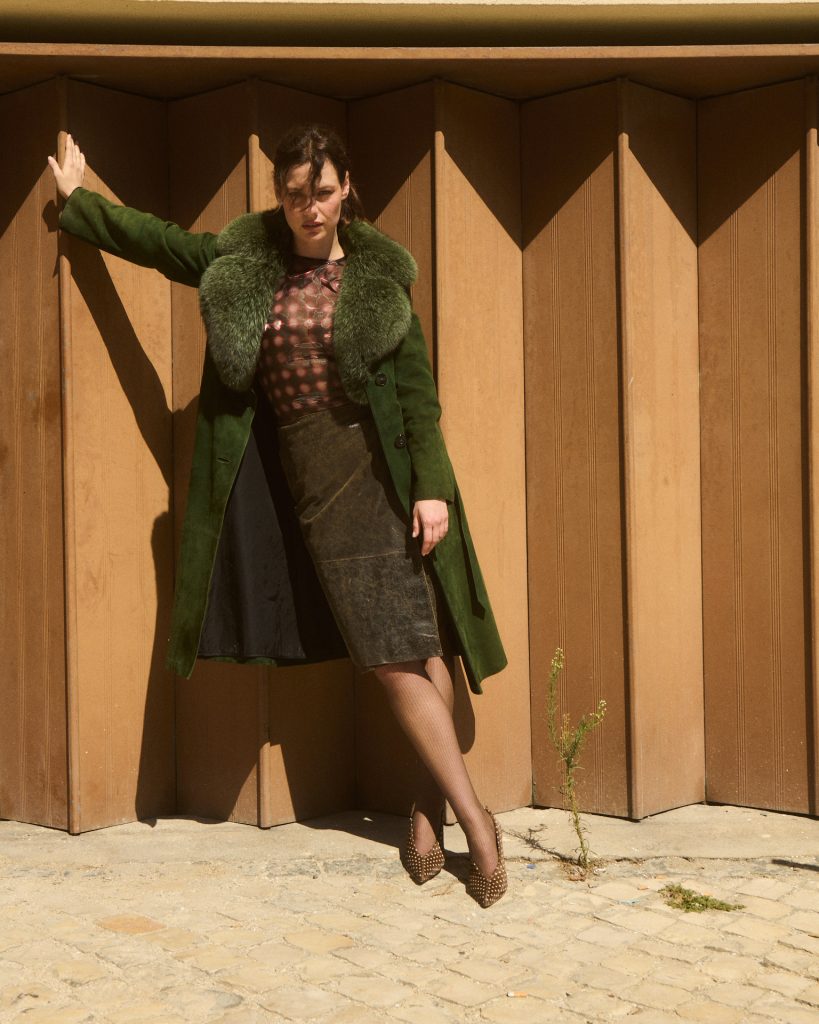
Photographer: Filip Kartous
Stylist: Teresa Abrunhosa @teresa_abrunhosa
Makeup: Sara Fonseca @sarafonseca_makeup