
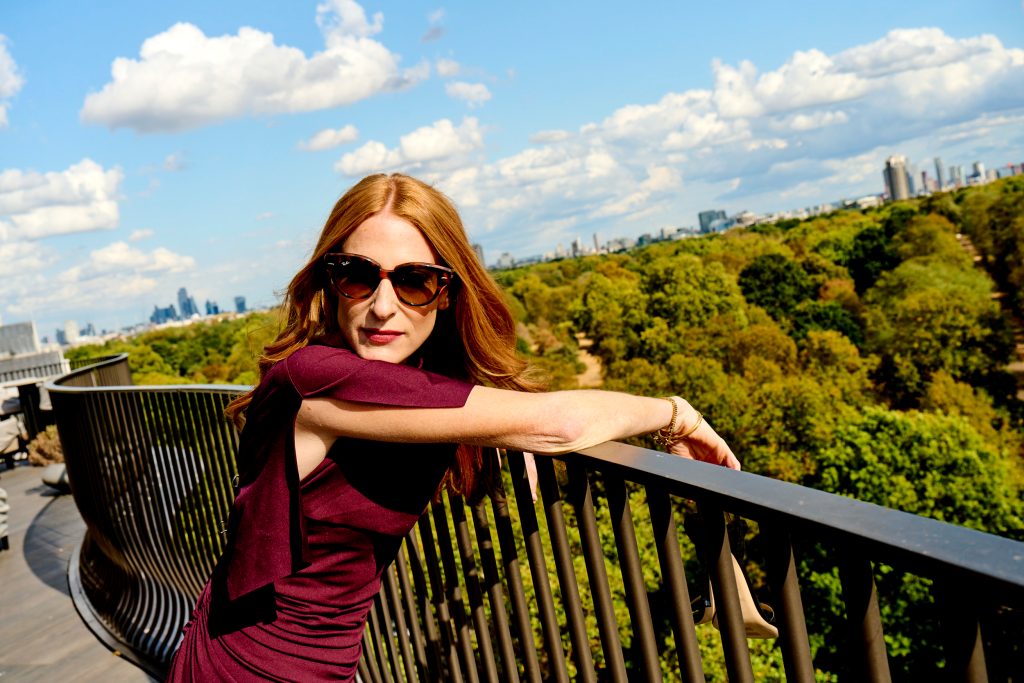
 After two decades on the British stage, Rosalie Craig is entering the most interesting act of her career—one in which women get older, louder, braver and considerably less interested in behaving as expected…
By Molly Rankin
Photos by Tim Jobling
There is something wonderfully unmanufactured about Rosalie Craig. She has spent much of her professional life in an industry devoted to illusion, yet she talks about success with an almost suspicious lack of mythology. There was no grand childhood master plan, no precocious certainty that she would become one of Britain’s most compelling performers.
Growing up in Nottingham, she remembers being taken to the local pantomime with her brother and sister and becoming intoxicated by the theatre itself: the smell, the programs, the singing, the peculiar magic of people walking onto a stage and becoming somebody else. Music came first. She taught herself guitar, played piano and imagined she might become a songwriter. Her parents weren’t theatrical people and there was no family machinery quietly steering her towards drama school. Eventually they found Rose Bruford and its actor-musician course, where Craig could compose, play and act. Even then, acting wasn’t necessarily the obvious destination. She remembers performing an extract from Macbeth and a teacher telling her, perhaps for the first time, that she might actually be an actor. Until then, she says, people had tended to think of her voice as “the thing.” What followed was less a calculated ascent than an education in possibility. Craig became a major theatre actress, but she refused to stay obediently inside the category assigned to her. “I don’t want to choose really, because I love them all,” she says. That instinct—to resist the neat little boxes the entertainment business adores—has become increasingly important as she has moved through her forties. Curiosity, she believes, matters more than arriving. There is, after all, no final summit in a creative career, only another part, another room, another opportunity to discover something you didn’t know you could do.
For all her success, Craig still possesses the actor’s astonishing ability to believe unemployment is approximately five minutes away. When the curtain comes down or filming wraps, she admits, some part of her immediately thinks: Well, I’ll never work again. Her agent periodically has to remind her that things are, in fact, going rather well. The contradiction is charming but revealing: this is an actress with decades of work behind her who still understands how much luck sits beside talent. Then came Sally Wainwright. Craig had just been rejected for a major job she desperately wanted when her agent called with an unexpected consolation prize: Wainwright wanted to meet her for Riot Women. Craig’s first reaction was disbelief. Her second was terror. She was filming in Ireland, read the script and became convinced she was completely wrong for it. Her agent’s response was gloriously unsentimental: “You better go and fucking work it out.” So Craig did. She flew back, changed in an airport toilet, saw the other actresses auditioning and discovered they were famous. She considered herself the wild card. Then something extraordinary happened in the room. Instead of the familiar audition divide—performer here, powerful decision-makers there—Wainwright began working with her. Questions flew. Scenes expanded. The casting director followed the action with the camera. Craig missed her flight back to Ireland and sat in the airport thinking that even if she didn’t get the part, the meeting itself had been worth it. A month later, the offer arrived. Only afterwards did she learn that Wainwright had seen her in the West End production of Company, had written her name in a book where she keeps actors she admires, and later opened that book while creating Riot Women. Others wondered whether Craig was the obvious choice. Wainwright insisted. The experience left Craig with something more valuable than another credit: a demonstration of what belief can do to an artist. “If someone believes in you,” she says, “the walls around you sort of disappear.”
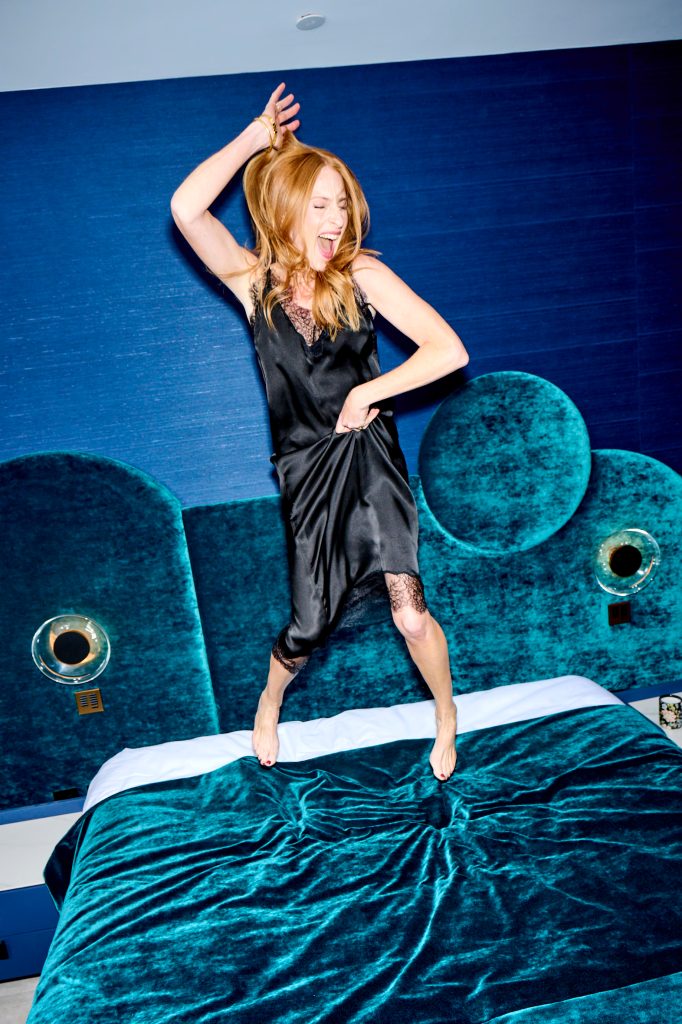
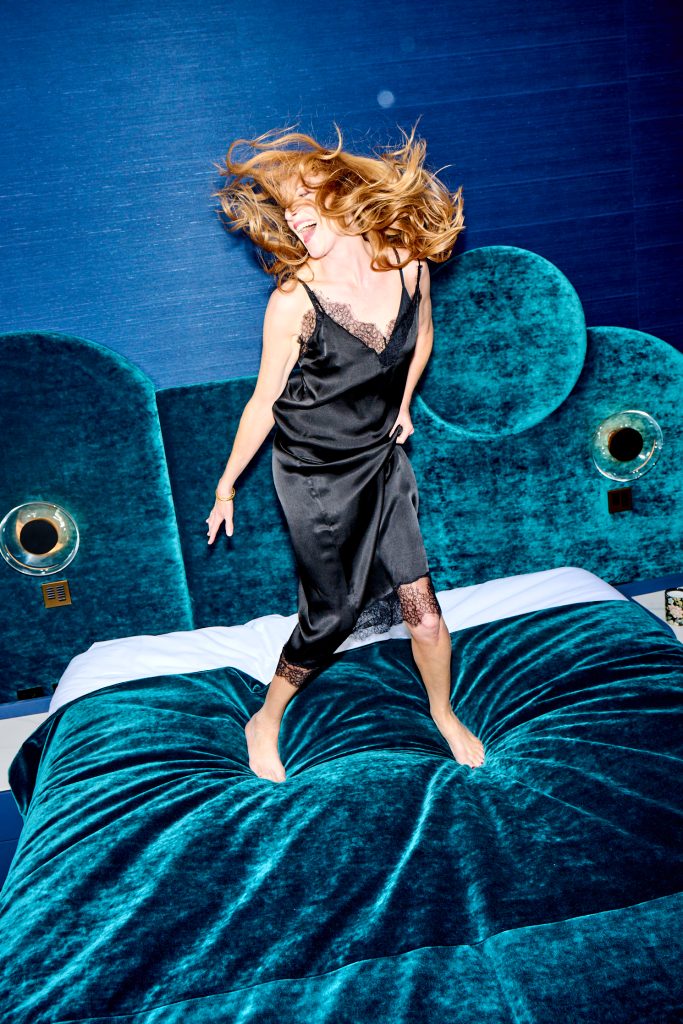
That sense of permission runs through Riot Women, which is perhaps why Craig speaks about it with such affection. The series refuses to polish women into socially acceptable versions of themselves. Menopause, sexuality, friendship, identity, ageing, ambition, bodies—the things television has historically preferred women either to endure attractively or discuss discreetly—are allowed into the room. Craig recalls conversations around a scene involving a heavy menopausal bleed and whether the blood should really be shown. Her response was essentially: yes, because this happens. She describes herself as perimenopausal and is refreshingly impatient with the expectation that women should keep certain realities neat, shiny and preferably invisible. What Wainwright’s writing does, Craig says, is “remove the editing” from women. That phrase lands because it reaches far beyond television. Women spend decades being edited: younger, prettier, calmer, nicer, thinner, more maternal, less sexual, more sexual, ambitious but not threatening, visible but never inconvenient.
Then comes the great disappearing trick of middle age, when society begins quietly suggesting that a woman’s appetite—for adventure, friendship, sex, reinvention, fashion, creativity, even attention itself—should politely diminish. Craig is having none of it. Appearance, she suggests, surely has to be among the least interesting things about a woman. Riot Women instead gives us women finding their voices and discovering one another without the tired machinery of female rivalry. Craig particularly loves that the relationships aren’t constructed around who has whose man or who looks better. They are simply women talking about real things. And something of that spirit spilled beyond the script. Craig talks about increasingly meeting women who genuinely champion other women—not because there is something to gain, but because generosity itself can be powerful.
Wainwright’s process was equally liberating. Craig says they spent roughly a month going through scenes and lines together, researching difficult material and consulting experts where the character’s history demanded care. It wasn’t a matter of learning dialogue and arriving on set. By the time filming began, Craig felt almost fully formed inside the character. That collaborative method suits an actress built in the theatre, where interrogation and rehearsal are part of the architecture. It also helps explain why Craig no longer seems interested in accepting artificial boundaries around her career. After Riot Women came Sherwood, and with it another marker of how quickly perceptions can change. Two years earlier, Craig had been trying to get a meeting for the series. Now she finds herself holding a central storyline. Her description of the moment is perfect: she feels “like a horse in a stable,” ready for the door to open. Theatre remains a profound love. She spent some 20 years working onstage before network television arrived, but love does not require exclusivity. She wants film. She wants television. She wants theatre. She wants stories she hasn’t imagined yet. Fame itself holds little fascination except for the access it might provide. “Fame’s a byproduct,” she says. What she actually wants is the luxury of choice: more interesting writing, unexpected characters, directors who see something in her she hasn’t yet seen herself. The sky, as she puts it, is the limit.
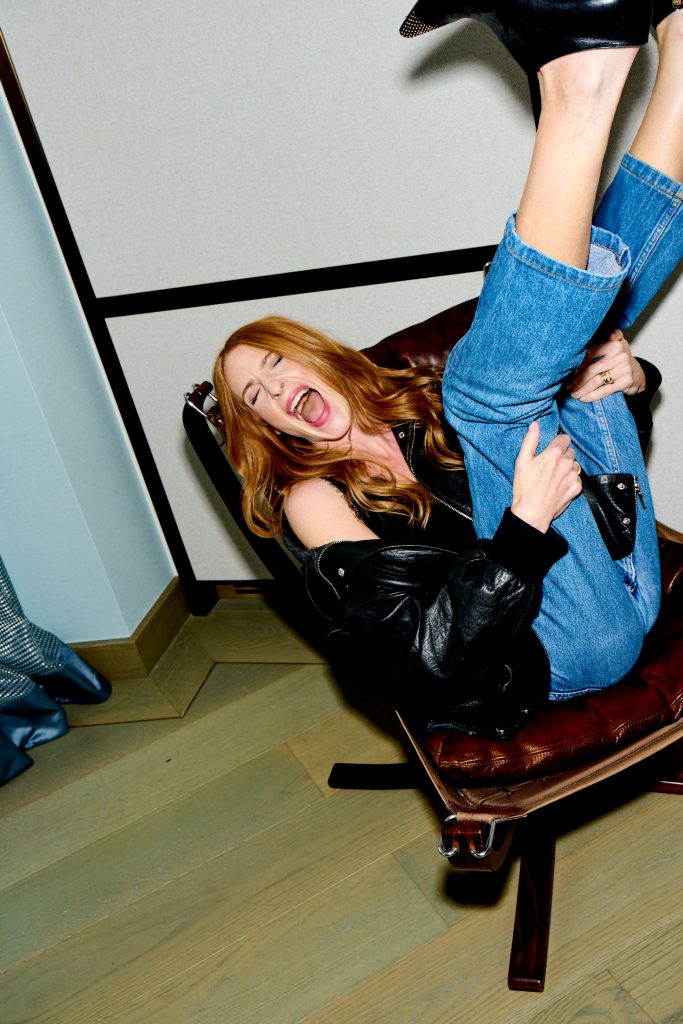
And then there is home, where grand conversations about women, culture and technology encounter a formidable nine-year-old critic. Craig and her husband have built what she describes as a creative household, one in which their daughter is encouraged to talk, question and form her own opinions. Her daughter is already suspicious of AI; when her parents use ChatGPT, she apparently demands to know why they aren’t using their brains. Craig laughs, but takes the larger question seriously. The internet can be brilliant when used well, she says, and the same may be true of AI, but we have to be particular about how we use it. The counterweight is real life: making something, going somewhere, seeing something inspiring, cultivating interests beyond a screen. Craig remembers childhood boredom as oddly productive because boredom forced her to discover what fascinated her. Most important is conversation. She hopes her daughter will always know she can talk to her parents and that they will give her their attention. “The best thing you can give a child is time,” she says.
It is perhaps the perfect line with which to understand Craig herself. Her career has not been built around arriving first. It has been built around time: time learning, time onstage, time becoming curious about new forms, time waiting for somebody like Sally Wainwright to open an old notebook and see her differently. Now, after years of being known predominantly as one thing or another, Rosalie Craig appears to be entering the period when she can simply be all of them. Actress. Musician. Mother. Collaborator. Woman in her forties. Work in progress. And, if that stable door finally swings completely open, very ready to run.
Photographer: Tim Jobling @ Lisa Pritchard Agency
Stylist: Natalie Fajer Team
BTS Camera/ Videographer: Kateryna
Hair & Makeup: Rebecca Hampson
Location: Park Modern, Penthouse, London